Det kom ett stort paket från Åland. Titta:
Det är 18 ullprover från Ålandsfår, en ras som höll på att dö ut. Proverna har samlats in av Sven-Olof Eriksson, mannen som först insåg att fåren på Ålands öar är en egen ras, annorlunda än den finska lantrasen och gutefåret på Gotland. Alla dessa hör till de nordiska kortsvansade fåren. Det finns mycket om alla raserna på nätet. Här är en länk till
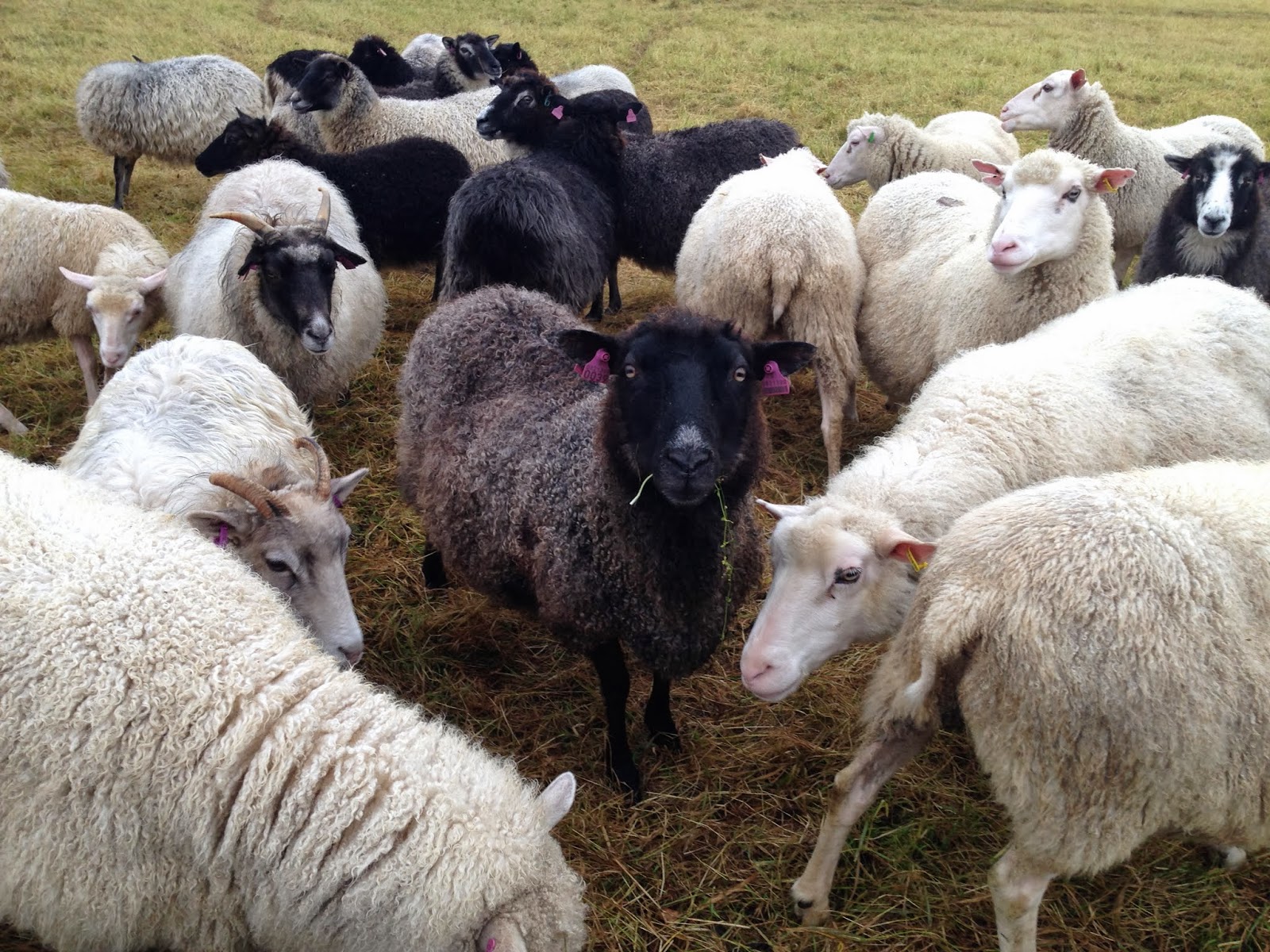
Föreningen Ålandsfåret , och här finns underbara foton:
Majas.
Min kontakt på Åland, Berit Sjöberg, skickade mig ull från Ålandsfåret för tio år sedan. Då fick jag första gången pröva på en ullsort som för oss raka vägen till rötterna: dessa fårs gener är gamla. Många av dem har fortfarande dubbel fäll, alltså bottenull och täckhår.
Det är en speciall känsla att arbeta med en dubbel fäll. Jag har fortfarande inga ullkammar, fast de funnits på min inköpslista i många år. Jag tror att om jag hittar bra kammar i Stirling i Skottland i augusti, så öppnar jag plånboken :)
Men tills dess får jag nöja mig med att kamma ur bottenullen med en hundkarda, eller kanske en hundkam. Man kan kamma ur bottenullen på det viset, men resultatet är litet annorlunda än med ullkammar. Jag testspann bottenullen från ett prov av Sven-Olofs vita tacklamm. Jag spann på stödd slända. Ullen är mjuk, och det går att spinna sytrådstunt garn av den. Täckhåren är ännu inte spunna. Det här garnet ses underst på bilden.
Ett andra prov spann jag av Berits ull från ett lika gammalt tacklamm, och det var av en helt annan typ. Här fanns inga täckhår ännu, men de kanske kommer senare. Vinterullen är smutsig, som den brukar vara, och ett sådant garn skulle man nog färga. Men kvaliteten är ljuvlig, fin och mjuk. Garnet ses överst på bilden. Jag spann på samma stödda slända.
På stödd slända kan jag spinna långdrag, och det gör garnerna luftiga och mjuka. På fotot ser man tydligt hur beredningen av ullen påverkar garn som är spunna på samma sätt med samma redskap. Det undre provet, som bara är kammat loss från täckhåren men inte kardat, är ojämnare än det övre, som spunnits av kardad ull.
Jag ska gå igenom alla proverna, dokumentera och fotografera, tvätta och provspinna. En del av ullen sänder jag åt Deborah Robson, vars stora Project du kan läsa om här:
The Project. Deb och hennes "besättning" på Spin Off startade projektet "Save the Sheep" för tio år sedan, och ur det genererades det gigantiska bokprojektet. Jag väntar med spänning på den här boken, det är väl det minsta jag kan säga :) Ålandsfåret kommer inte med i boken annat än som ett omnämnande, eftersom valet av raser begränsas till engelsktalande länder, men Deb är väldigt nyfiken på ull från Ålandsfåret. Jag tar med lite ull till Stirling i augusti, där min vän Malin och jag spinner i Debs kurs om ull från sällsynta raser.
I got a big package from Åland: 18 wool samples from the endangered Alandic sheep. The samples are from several flocks. They where collected by Sven-Olof Eriksson, the man who first saw that these archipelago sheep where of a different kind than the landrace on the mainland, and Gute on Gotland. There is much information on internet, but if you follow this link:
Ålandsfåret you come to the website for the Alandic sheep (in Swedish). Here are some wonderful pictures:
Maijas.
Ten years ago my contact on Åland, Berit Sjöberg, sent me some wool from the Alandic sheep. I then for the first time handled wool from sheep with undercoat and outercoat. This is wool that takes you straight back to the roots: the genes of these sheeps are old.
It's a special feeling to work with a double coat. I still don't own wool combs, even if they have been on my shopping list for ages. They are quite expensive, but if I find good combs in August in Stirling, Scotland, I might finally open my wallet :)
I combed out some undercoat with my dog slicker, and got a heap of soft, short wool, and a heap of long, coarser wool, from Lars-Olof's eweslamb. The wool is soft, and very easy to spin into a superthin yarn. I spun some of it on a supported spindle. The outer hair is still to be spun. You can see the yarn at the bottom of the picture.
Above in the picture is a yarn I spun on the same supported spindle. This sample comes from Berit's eweslamb, and it is of a quite different quality. There are no outer coat, and I thought that maybe they come later, or, this individual might have a fleece with mostly soft undercoat. The sample is winter wool, and that means it's dirty because the sheep are kept in shelters. This wool is also easy to spin into a superthin yarn, but it would need to be dyed because it's impossible to get all the dirt scoured out.
On a supported spindle I can spin with a long draw, resulting in a lofty yarn. On the picture you can see how preparing fibers change how yarns spun in the same way with the same tool: the yarn below is spun from uncarded fibers that were only combed out of the dubble coat resulting in an uneven yarn, and the yarn above was spun from carded fibers resulting in a more even yarn.
I will send part of the samples to Deborah Robson later, when I have scoured and documented the samples. Deb's big Project is taking gigantic proportions, just look here:
The Project. Deb and her "crew" at Spin Off started the "Save the Sheep" project some ten years ago, and that generated this book project that I look forward to see finished, the least to say! The Alandic sheep will not be in the book, only mentioned, as the sheep chosen are from English talking countries. But Deb is keen to see wool from the Alandic sheep. I'll take some of it with me to Stirling in August, where I will spin together with my friend Malin i Deb's class on wools from rare sheep.